What is the Golang Gopher?
The Golang gopher is the official mascot of the Go programming language. It represents the Go project, its developers, and the growing global community that builds software using Go.
Unlike typical corporate logos, the Go gopher is a friendly cartoon character that symbolizes the personality of the Go ecosystem—simple, approachable, and fun to work with. Over time, the gopher has become one of the most recognizable symbols in the programming world.
The mascot appears in:
- Go conferences such as GopherCon
- community meetups and developer events
- stickers, plush toys, and merchandise
- illustrations used by Go developers worldwide
Although the Go programming language was created at Google, the gopher itself is not just a corporate logo. Instead, it represents the open-source Go community and the culture around it.

Why the Go programming language uses a gopher as its mascot
The Go project adopted the gopher because it reflects the spirit of the language: friendly, simple, and productive.
Programming languages often use mascots to make their communities more approachable. Similar examples include:
- Tux for the Linux kernel
- Ferris the Crab for Rust
- Duke for Java
The gopher became associated with Go because of its playful design and its existing connection with earlier artwork created by illustrator Renée French.
The character quickly became popular among Go developers and was widely used in presentations, documentation, and conference branding.
What the Golang gopher represents in the Go community
Within the Go ecosystem, the gopher represents more than just a mascot.
It symbolizes:
- the Go programming language
- the developer community
- the open and collaborative nature of the Go ecosystem
Developers often create custom gopher illustrations representing different countries, user groups, or projects. These variations appear on:
- community websites
- conference slides
- stickers and merchandise
- developer avatars
Because of this, the gopher has become a shared identity for Go developers around the world.
Who Created the Golang Gopher?
The Golang gopher mascot was designed by Renée French, an illustrator known for her distinctive cartoon style.
Renée French has created many whimsical illustrations over the years, and her unique art style helped make the gopher instantly recognizable.
The design eventually became closely associated with the Go programming language and is now one of the most famous mascots in the software development community.
Renée French and the origin of the Go mascot
The original gopher illustration was created by Renée French, also known by the nickname “rsc” in the Go community.
Before it became the Go mascot, the gopher appeared in other contexts as part of French’s artwork. Her simple, expressive drawing style made the character memorable and easy to recognize.
When the Go project needed a mascot, the existing gopher design naturally fit the friendly and accessible philosophy of the language.
Because the illustration was already popular among early Go developers, it quickly became the official mascot of the Go community.
How the gopher became associated with the Go project
When the Go programming language was publicly introduced, the development team wanted a visual identity that would represent the project.
Renée French’s gopher illustration was chosen because it was:
- distinctive
- memorable
- friendly and approachable
Over time, the gopher began appearing in:
- Go presentations and documentation
- the official Go website
- conference materials
- developer merchandise
The mascot quickly gained popularity among developers and became an iconic symbol of the Go programming language.
History of the Golang Gopher
Although the gopher is now strongly associated with Go, its origins actually predate the Go programming language itself.
The character existed before Go was created and was later adopted as the mascot for the project.
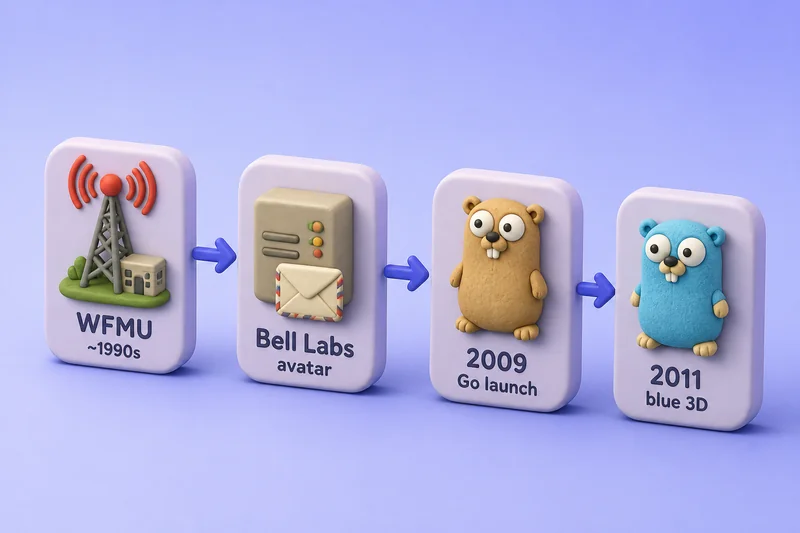
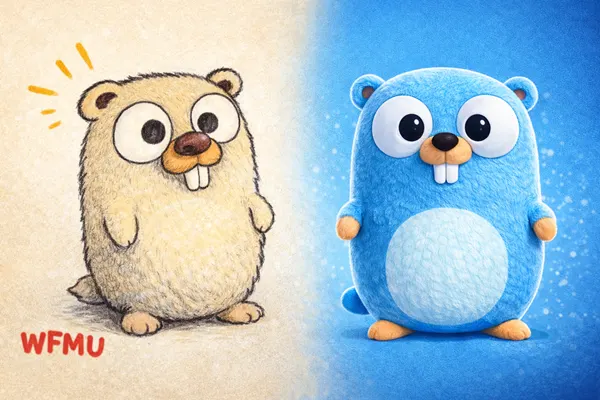
The original WFMU radio gopher
The earliest appearance of the gopher was related to a promotional design created for the WFMU radio station in New Jersey.
Renée French was asked to design artwork for a fundraising T-shirt, and the gopher illustration was the result. The character quickly became recognizable because of its distinctive style and playful appearance.
At that time, the gopher had no connection to the Go programming language.

Adoption by the Go programming language
Years later, when the Go programming language was introduced, the gopher design was adapted to represent the new project.
Members of the Go development team appreciated the character’s friendly personality and unique appearance. As a result, the gopher became closely associated with Go and began appearing in official Go materials.
The mascot helped give the Go project a recognizable identity within the programming community.
Evolution of the Go gopher design
Over the years, the Go gopher has evolved into several different forms.
Some of the most recognizable versions include:
- the classic blue Go gopher illustration
- three-dimensional plush gopher toys
- community-created gopher variations
These adaptations appear at developer conferences, community events, and online forums.
Despite the many variations, the original character design created by Renée French remains the foundation of all official Go gopher artwork.
Official Golang Gopher Design
The Golang gopher mascot has become one of the most recognizable characters in the programming world. Although many variations exist, the design is based on the original artwork created by Renée French.
The official Go gopher illustration is known for its distinctive features:
- round body and simple shape
- large expressive eyes
- small buck teeth
- blue color associated with the Go brand
These elements give the mascot a playful and approachable appearance that reflects the philosophy of the Go programming language: simple, efficient, and enjoyable to use.
Over time, the gopher design has been adapted into many formats while maintaining the original artistic style.
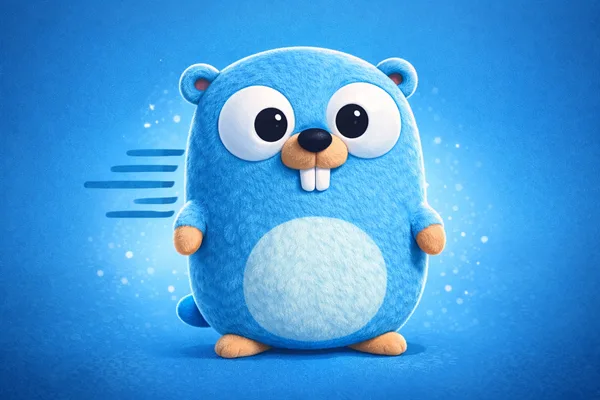
The blue Go gopher mascot
The most widely recognized version of the Go mascot is the blue Go gopher.
This design is used across many official Go materials, including:
- developer documentation
- conference slides
- Go community websites
- developer stickers and merchandise
The blue color scheme aligns with the branding of the Go programming language and helps distinguish the mascot from other programming language symbols.
Despite the many variations used by the community, the classic blue gopher remains the most iconic representation of Go.

2D vs 3D gopher designs
The Go gopher originally appeared as a two-dimensional illustration drawn by Renée French. This version is commonly used in documentation, websites, and community artwork.
Later, the mascot was adapted into three-dimensional models for promotional and community events.
Examples include:
- rendered 3D gopher figures
- collectible figurines
- digital graphics used in conference branding
The 3D versions preserve the same recognizable facial features and proportions while giving the mascot a more modern and dynamic appearance.
The plush Go gopher used in conferences
One of the most popular versions of the mascot is the plush Go gopher.
These soft toy versions of the character have appeared at several developer conferences and technology events, particularly at GopherCon and other Go community gatherings.
The plush gopher became especially popular during early Go conferences where they were distributed as promotional items for developers attending the events.
Today, plush gophers are widely recognized as a collectible symbol within the Go community.
Golang Gopher Licensing and Usage Rules
Although the gopher mascot is widely used in the Go community, it is important to understand the licensing and attribution rules associated with the artwork.
The original gopher illustrations are protected by licensing terms that allow reuse while requiring proper credit to the creator.
Developers and organizations using the gopher image should follow these guidelines when incorporating it into presentations, websites, or community materials.
Creative Commons license for gopher images
The Go gopher artwork created by Renée French is distributed under a Creative Commons Attribution 3.0 license.
This means:
- the artwork can be reused or modified
- it can be used in community materials
- it can appear in presentations or websites
However, users must provide proper attribution to the original creator.
This licensing model allows the Go community to freely create variations of the mascot while still recognizing the original artist.
When attribution to Renée French is required
Whenever the gopher artwork is used or modified, credit should be given to Renée French.
Typical attribution may appear as:
- a credit line on a website
- a reference in presentation slides
- documentation acknowledging the original artwork
Providing attribution ensures that the creator receives recognition for the design while allowing the community to continue using and adapting the mascot.
Trademark restrictions for official gopher designs
Some official gopher merchandise and designs may also be subject to trademark restrictions.
For example:
- official plush gopher toys
- conference merchandise
- commercial products using the mascot
These items may require additional permission depending on how the design is used.
As a result, community projects usually create custom variations of the gopher instead of using official commercial designs directly.
Golang Gopher Variations Around the World
One of the most interesting aspects of the Go mascot is how widely it has been adapted by the global Go community.
Developers around the world frequently create custom gopher designs representing local communities, events, or projects.
These adaptations help showcase the creativity and diversity of the Go ecosystem.

Community-created gopher mascots
Go user groups often create their own versions of the mascot.
These community designs typically incorporate elements such as:
- national flags
- local cultural themes
- regional symbols
- programming tools or project logos
Each design maintains the recognizable style of the original gopher while adding unique characteristics.
This tradition has become a popular way for Go communities to express their identity.
Gopher mascots used in Go conferences
Go conferences frequently introduce special gopher designs for their events.
For example:
- GopherCon conference mascots
- event-specific gopher artwork
- themed mascots for regional Go meetups
These mascots often appear on:
- conference websites
- banners and event posters
- developer badges and stickers
Over time, conference gophers have become collectible symbols within the Go community.
Custom gophers used by developer communities
Many developers also design personal or project-specific gopher illustrations.
These custom gophers may represent:
- open-source projects
- programming tools
- development teams
- educational resources
Because the mascot is widely recognized, these variations help developers immediately identify the project as part of the Go ecosystem.
How Developers Use the Golang Gopher
The Golang gopher is more than just a mascot—it has become a central symbol of the Go developer community.
Developers frequently use the character to represent their involvement with the Go programming language.
The mascot appears in many contexts, ranging from conference branding to personal developer profiles.
Go conference branding
Major Go conferences such as GopherCon often feature the mascot prominently in their branding.
The gopher appears on:
- conference websites
- event banners
- presentation slides
- conference merchandise
These visuals help reinforce the connection between the mascot and the Go developer community.
Stickers, mascots, and developer culture
The Go gopher is widely used in developer culture.
Common examples include:
- laptop stickers
- T-shirts and merchandise
- online avatars
- community artwork
Many Go developers proudly display gopher stickers on their laptops as a symbol of their connection to the Go ecosystem.

The gopher as a symbol of Go programmers
Over time, the gopher has evolved into a symbol of Go programmers themselves.
In many communities, Go developers are informally referred to as “gophers.”
This nickname reflects the strong identity that the mascot has created within the Go ecosystem.
As a result, the Golang gopher continues to serve as both a mascot for the programming language and a cultural symbol for the developers who use it.
How to Design Your Own Golang Gopher
Many developers enjoy creating their own variations of the Golang gopher. Custom gopher illustrations are widely used by Go user groups, open-source projects, conference organizers, and individual developers.
Because the mascot is licensed under a Creative Commons license, the community is encouraged to create creative adaptations while respecting the original artwork created by Renée French.
Custom gopher designs usually maintain the core features of the original character while adding unique elements that represent a specific community, country, or project.
Official gopher design guidelines
Although many variations exist, most custom designs follow several informal guidelines based on the original gopher artwork.
Common design characteristics include:
- maintaining the recognizable round body shape
- keeping the large eyes and buck teeth
- preserving the friendly cartoon style
- ensuring the character remains easily recognizable as the Go gopher
These elements help maintain consistency across the many gopher designs used by the Go community.
Developers typically modify:
- clothing
- accessories
- colors
- environment or theme
This allows communities to personalize the mascot while still preserving its identity.
Tools and resources to create custom gophers
Creating a custom gopher design does not require advanced illustration tools. Many developers and designers use common graphic tools such as:
- vector design tools like Adobe Illustrator or Inkscape
- digital drawing tools like Procreate or Photoshop
- online design tools such as Figma or Canva
Some Go community resources also provide templates or base illustrations that developers can modify to create their own versions of the mascot.
Using vector graphics is often recommended because it allows the design to be resized easily for different uses such as stickers, banners, and websites.
Gopher design model sheet
A well-known gopher model sheet was presented by Renée French during a GopherCon talk. The model sheet explains how the mascot should be drawn and shows the proportions used in the original design.
The model sheet includes:
- front and side views of the gopher
- facial expressions
- body proportions
- drawing guidelines
Developers often use this model sheet as a reference when designing new gopher variations.
Popular Golang Gopher Images
Over the years, many versions of the Go gopher have appeared across the developer ecosystem. Some designs are official, while others are community-created adaptations used in conferences and developer groups.
These images have helped make the gopher one of the most recognizable mascots in the programming world.

Classic Go gopher illustration
The classic Go gopher illustration is the original design created by Renée French. It is typically shown as a blue cartoon character with large eyes and a simple, friendly expression.
This version appears in:
- Go documentation
- developer presentations
- community websites
- educational materials
The classic illustration remains the foundation for most other gopher variations.
Plush Go gopher mascot
One of the most popular versions of the mascot is the plush Go gopher toy.
These soft toy versions of the character were introduced during Go developer events and quickly became a favorite among the community.
Plush gophers are often seen at:
- Go conferences
- developer meetups
- technology exhibitions
Many Go developers collect these plush toys as souvenirs from events such as GopherCon.
Custom community gopher designs
Developers around the world frequently create custom gopher illustrations representing their local communities or projects.
Examples include:
- country-themed gophers
- conference mascots
- project-specific gopher designs
- themed gophers used by Go user groups
These designs demonstrate the creativity of the Go community and reinforce the mascot’s role as a shared symbol among developers.
Interesting Facts About the Golang Gopher
The Go gopher has become more than just a mascot for a programming language. Over time it has developed its own history, traditions, and cultural significance within the developer community.
Why the gopher has no official name
Unlike many other programming language mascots, the Go gopher does not have an official name.
The character is simply referred to as the Go gopher. This allows the community to treat the mascot as a shared symbol rather than a specific character with a fixed identity.
Many developers still create their own names for custom gopher variations used in conferences or projects.
How the gopher became a global programming mascot
The gopher became globally recognized as the symbol of the Go programming language because of its strong presence in the developer community.
As Go grew in popularity, the mascot began appearing in:
- developer conferences
- open-source project documentation
- programming tutorials
- community artwork
Because of its friendly and recognizable appearance, the gopher helped give the Go ecosystem a distinct visual identity.
Fun facts about Go conferences and gophers
There are several interesting traditions surrounding the Go mascot within the developer community.
For example:
- Go developers are often informally called “gophers.”
- GopherCon conferences frequently feature unique gopher designs.
- Custom gopher stickers are commonly traded between developers at events.
- Many Go user groups create their own regional gopher mascots.
These traditions show how the mascot has become an important part of Go developer culture.
Summary
The Golang gopher is the official mascot of the Go programming language and one of the most recognizable symbols in the developer community.
Originally illustrated by Renée French, the character was adopted by the Go project and quickly became associated with the language and its ecosystem. The mascot represents the friendly, simple, and collaborative spirit of the Go community.
Over the years, the gopher has appeared in many forms, including classic illustrations, plush toys, conference mascots, and community-created designs used by developer groups around the world.
Because of its open licensing and distinctive appearance, the gopher continues to inspire creative adaptations while remaining a unifying symbol for Go programmers everywhere.
Official Documentation
You can learn more about the origin and design of the Golang gopher from the official Go documentation and community resources.


![GO Bytes to String Conversion Best Practices [5 Methods]](/go-bytes-to-string/golang-byte-to-string_hu_e997372962029da.webp)